
What speed reading can and can’t do
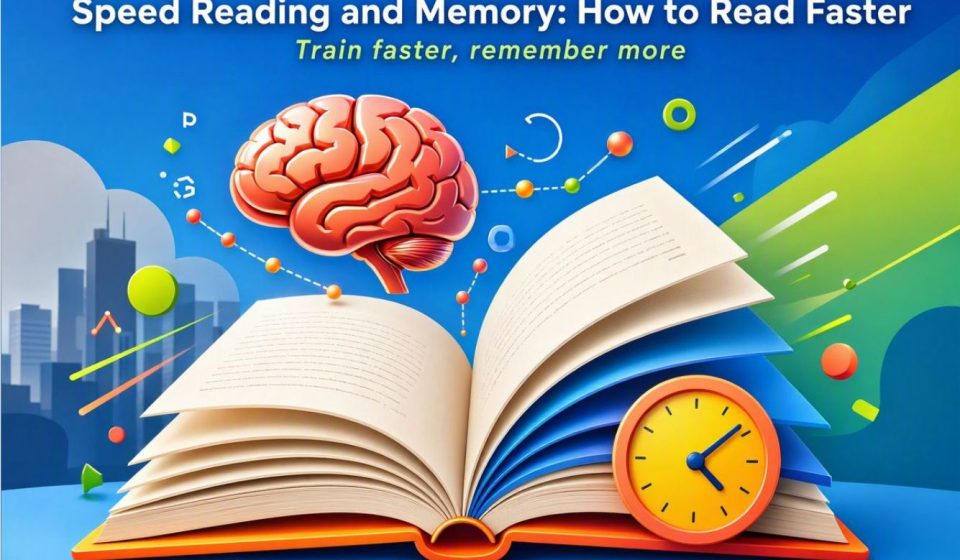
The average adult reads nonfiction at roughly 240 words per minute. With practice, most people can raise that pace comfortably. But claims of 1,000 words per minute with full understanding don’t hold up, because comprehension drops as speed climbs past a certain point. A better goal is a steady, meaningful increase in pace with retention you can rely on.
Preview before you read
Spend one minute skimming the headings, the first sentence of each section, and any summary. You’re building a mental map, which gives new information something to attach to. That’s the same principle behind the memory palace: connected facts are far easier to recall than isolated ones. Reading also goes faster when nothing in the text is a surprise.
Guide your eyes
Run a pen, finger, or cursor beneath the line as you read. A steady pace cuts down on regression, the habit of unconsciously looping back over words you’ve already seen, and it keeps your attention from drifting. As you get comfortable, try taking in small groups of words at a time instead of one word at a time. It works like chunking a phone number: your brain handles groups better than single pieces.
Pause to recall instead of re-reading
After each section, look away from the page and state the main point in your own words. This is active recall, and it takes about ten seconds. Re-reading feels productive but it’s one of the weakest ways to learn. Pulling the information back out of your head is what builds the memory.
Review on a schedule
Keep a one-line summary for each chapter or article. Glance at those notes the next day, again after a week, and again after a month. Spaced review tells your brain the material is worth keeping, and it takes only a few minutes.
Match your speed to your purpose
Speed reading isn’t one setting. Move quickly through routine emails and familiar topics. Slow down for contracts, technical material, and anything you’ll need to remember months from now. Skilled readers shift gears constantly.
Reading faster is a skill you can build, and it works best when it’s built on recall. If you’d like a guided path to stronger retention across everything you read, the memory improvement course from IMEducators walks you through the techniques step by step.